


What are polycarbonate roof screws?
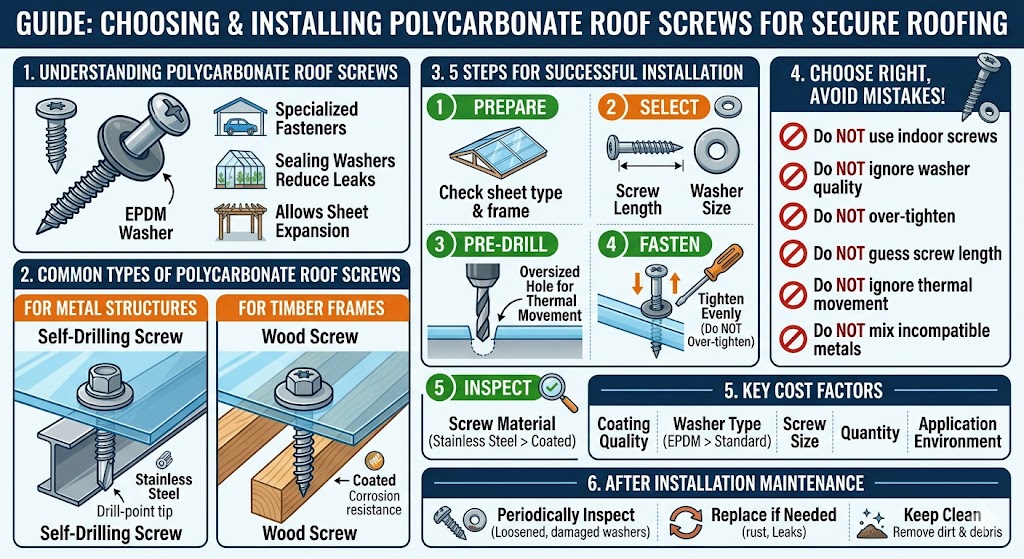
Polycarbonate roof screws are fastening screws designed to secure polycarbonate roofing sheets to metal, timber, or other supporting structures. Unlike ordinary screws, they are usually paired with sealing washers to reduce water leakage, protect the sheet surface, and help the roof remain stable under outdoor conditions.
Polycarbonate roofing is often used for patios, carports, pergolas, awnings, skylights, greenhouses, storage sheds, and commercial daylight roofing. These applications need fasteners that can handle weather exposure, sheet expansion, wind uplift, and repeated temperature changes. Choosing the wrong screw can lead to leaks, cracked panels, loosened sheets, or premature roof damage.
A good polycarbonate roof screw should do more than simply hold the sheet in place. It should provide reliable grip, compatible sealing, suitable corrosion resistance, and enough allowance for sheet movement. Since polycarbonate expands and contracts with temperature changes, the fastening method is especially important.
Many roof problems happen not because the sheet itself is poor quality, but because the wrong screw, wrong washer, or incorrect installation method was used. That is why installers, contractors, and DIY users should pay close attention to screw length, head type, washer size, drilling method, and screw spacing before starting the job.
Which types of polycarbonate roof screws are commonly used?
Self-drilling screws for metal structures
Self-drilling polycarbonate roof screws are commonly used when fixing sheets onto steel purlins, metal frames, or aluminum structures. These screws have a drill-point tip, allowing them to penetrate metal without a separate pilot hole in many applications.
They are practical for carports, industrial roofing, canopy systems, and other metal-framed projects. However, the screw must still be selected based on the thickness of the metal structure and the roofing sheet. Using a screw that is too short or too weak may reduce holding power.
Wood screws for timber frames
When polycarbonate sheets are installed on timber rafters or wooden battens, wood-thread screws are usually preferred. These screws are designed to bite into timber and provide stable holding strength.
For outdoor roofing, the screw material and coating matter. Poor-quality screws may rust, stain the roof, or lose grip over time. For exposed areas, corrosion-resistant screws are generally a better choice.
Screws with EPDM sealing washers
Many polycarbonate roof screws use EPDM sealing washers. These washers help seal the screw hole and reduce the risk of water entering through the fastening point. The washer also helps distribute pressure across the sheet surface.
The washer should not be over-compressed during installation. If the screw is driven too tightly, the washer may deform and the polycarbonate sheet may crack or buckle. A properly tightened screw should hold the sheet firmly while keeping the washer seated evenly.
Stainless steel and coated screws
Stainless steel screws are often used in humid, coastal, or highly exposed environments because they offer stronger corrosion resistance. Coated screws may also be used for general outdoor roofing, depending on the project environment and expected service life.
For long-term roofing projects, material selection should not be treated as a minor detail. Rusted screws can weaken the roof, cause stains, and make maintenance harder later.
How to install polycarbonate roof screws in 5 steps
Step 1: Confirm the sheet type, frame material, and roof layout
Before choosing polycarbonate roof screws, confirm whether the sheet is solid polycarbonate, corrugated polycarbonate, or multiwall polycarbonate. Each sheet type may require a different fastening approach. You should also confirm whether the supporting structure is steel, aluminum, or timber.
The roof layout also matters. Roof pitch, wind exposure, sheet overlap, and fixing points all affect screw quantity and placement. A roof installed in an exposed outdoor area usually needs more careful fastening than a small sheltered awning.
Step 2: Select the correct screw length and washer size
The screw must be long enough to pass through the polycarbonate sheet, washer, and any overlap area before securely engaging the supporting structure. A screw that is too short may not hold properly, while an overly long screw may be difficult to install neatly.
Washer size should also match the roofing profile. A washer that is too small may not seal the hole properly, while a washer that is too large may look bulky or interfere with panel movement.
Step 3: Pre-drill holes when expansion clearance is needed
Polycarbonate expands and contracts with temperature changes, so many installations require oversized holes in the sheet to allow movement. Pre-drilling the sheet can reduce stress around screw points and help prevent cracking.
The hole should be clean, smooth, and correctly positioned. Avoid forcing screws directly through the sheet without considering expansion clearance, especially on larger panels or roofs exposed to direct sunlight.
Step 4: Fasten screws evenly without over-tightening
When installing polycarbonate roof screws, tighten each screw until the washer sits flat and seals properly. Do not crush the washer or visibly deform the sheet. Over-tightening is one of the most common causes of cracks, leaks, and panel distortion.
It is also important to maintain consistent spacing. Uneven screw placement can create stress points and may cause panels to lift, rattle, or move unevenly during wind or temperature changes.
Step 5: Inspect sealing, alignment, and sheet movement
After installation, check whether each washer is seated properly, the screws are aligned, and the sheets remain flat without excessive tension. Also inspect overlaps, edge areas, and any roof penetrations where leakage is more likely.
A final inspection is especially useful before heavy rain or before handing over a project to the owner. Small fastening errors are easier to correct immediately than after the roof has already been exposed to weather.
How to choose polycarbonate roof screws and avoid 6 common mistakes
Choosing polycarbonate roof screws should be based on structure, weather exposure, sheet profile, and long-term performance. The following points can help prevent common fastening problems.
- Do not use ordinary indoor screws: Indoor screws may rust quickly and may not provide reliable sealing for outdoor roofing.
- Do not ignore washer quality: The washer is critical for sealing. Poor washers may harden, crack, or leak over time.
- Do not over-tighten the screw: Excessive pressure can damage the sheet, deform the washer, and reduce expansion allowance.
- Do not choose screw length by guesswork: The screw must match the sheet thickness, profile height, and frame material.
- Do not install without considering thermal movement: Polycarbonate needs room to expand and contract, especially on large roof areas.
- Do not mix incompatible metals carelessly: In some environments, incompatible metal contact can accelerate corrosion or reduce durability.
For professional projects, screw specifications should be confirmed before installation begins. For DIY work, it is better to buy screws designed specifically for polycarbonate roofing instead of adapting general-purpose fasteners.
What affects the cost of polycarbonate roof screws?
The cost of polycarbonate roof screws varies depending on material, coating, size, washer type, quantity, and project requirements. It is not always useful to compare price by unit alone because cheaper screws may have lower corrosion resistance, weaker washers, or inconsistent manufacturing quality.
| Cost factor | How it affects pricing |
|---|---|
| Screw material | Stainless steel screws usually cost more than basic coated screws but offer better corrosion resistance. |
| Coating quality | Higher-grade coatings may improve outdoor durability and reduce rust risk. |
| Washer type | EPDM washers or larger sealing washers can increase cost but improve waterproofing performance. |
| Screw size | Longer or heavier-duty screws generally cost more than shorter standard screws. |
| Quantity | Bulk purchases may reduce unit cost, especially for contractors or large roofing projects. |
| Application environment | Coastal, humid, or exposed sites may require more durable and higher-cost fasteners. |
Instead of asking only “How much are polycarbonate roof screws?”, it is more practical to ask whether the screw matches the roof design, expected service life, and installation environment. A reliable fastener can help reduce future repair costs caused by leaks, corrosion, or sheet movement.
How to maintain polycarbonate roof screws after installation
After installation, polycarbonate roof screws should be inspected periodically, especially after storms, strong winds, or long periods of sunlight exposure. Look for loose screws, damaged washers, rust marks, cracked sheet areas, and signs of water leakage.
If a washer becomes brittle or cracked, it should be replaced before leaks spread. If screws are rusted, replacement should be considered based on the roof condition and supporting structure. Do not simply apply sealant over every problem without checking whether the screw itself has failed.
Cleaning is also important. Dirt, leaves, and debris can trap moisture around fasteners and roof overlaps. Keeping the roof clean helps reduce long-term moisture exposure and makes inspection easier.
What should you confirm before buying polycarbonate roof screws?
Before buying polycarbonate roof screws, confirm the roofing sheet type, sheet thickness, supporting frame material, roof exposure, screw spacing, and whether sealing washers are included. These details help determine the correct screw length, thread type, material, and washer design.
For small DIY roofing projects, prepared screw-and-washer sets may be convenient. For larger roofing jobs, it is better to calculate the required quantity carefully and prepare extra screws for overlaps, edge areas, and replacement during installation.
If the project involves coastal exposure, commercial roofing, heavy wind areas, or large polycarbonate sheets, professional installation guidance is recommended. Correct fastening improves waterproofing, roof stability, and long-term durability.
Polycarbonate roof screws FAQ
Q1: What are polycarbonate roof screws used for?
Polycarbonate roof screws are used to fasten polycarbonate roofing sheets to metal, timber, or aluminum structures while helping seal the fixing points with washers.
Q2: Do polycarbonate roof screws need washers?
Yes. Washers, especially sealing washers, help prevent water leakage and distribute pressure around the screw hole.
Q3: Can I use regular screws for polycarbonate roofing?
Regular screws are not recommended because they may lack proper sealing, corrosion resistance, and compatibility with polycarbonate sheet movement.
Q4: Should I pre-drill holes for polycarbonate roof screws?
Pre-drilling is often recommended because polycarbonate expands and contracts. Oversized holes can help reduce stress and lower the risk of cracking.
Q5: How tight should polycarbonate roof screws be?
They should be tight enough for the washer to sit evenly and seal the hole, but not so tight that the washer is crushed or the sheet is deformed.
Q6: What screw material is best for outdoor polycarbonate roofing?
Stainless steel or high-quality coated screws are commonly chosen for outdoor roofing because they provide better resistance against rust and weather exposure.
Q7: How many polycarbonate roof screws do I need?
The quantity depends on sheet size, roof layout, support spacing, wind exposure, and overlap design. It is best to calculate based on the specific roof plan.
Q8: Can polycarbonate roof screws be used on both metal and wood frames?
Yes, but the screw type must match the frame. Self-drilling screws are commonly used for metal, while wood-thread screws are used for timber structures.
Q9: How long does installation usually take?
Installation time depends on roof size, sheet type, frame condition, and installer experience. Small projects may be completed quickly, while larger roofs require more layout and fastening time.
Q10: When should polycarbonate roof screws be replaced?
They should be replaced when screws are rusted, loose, damaged, or when sealing washers become cracked, hardened, or unable to prevent leakage.
